Last updated October 31, 2026
 Sweep & inspection
 Caps & crowns
 Flue relining
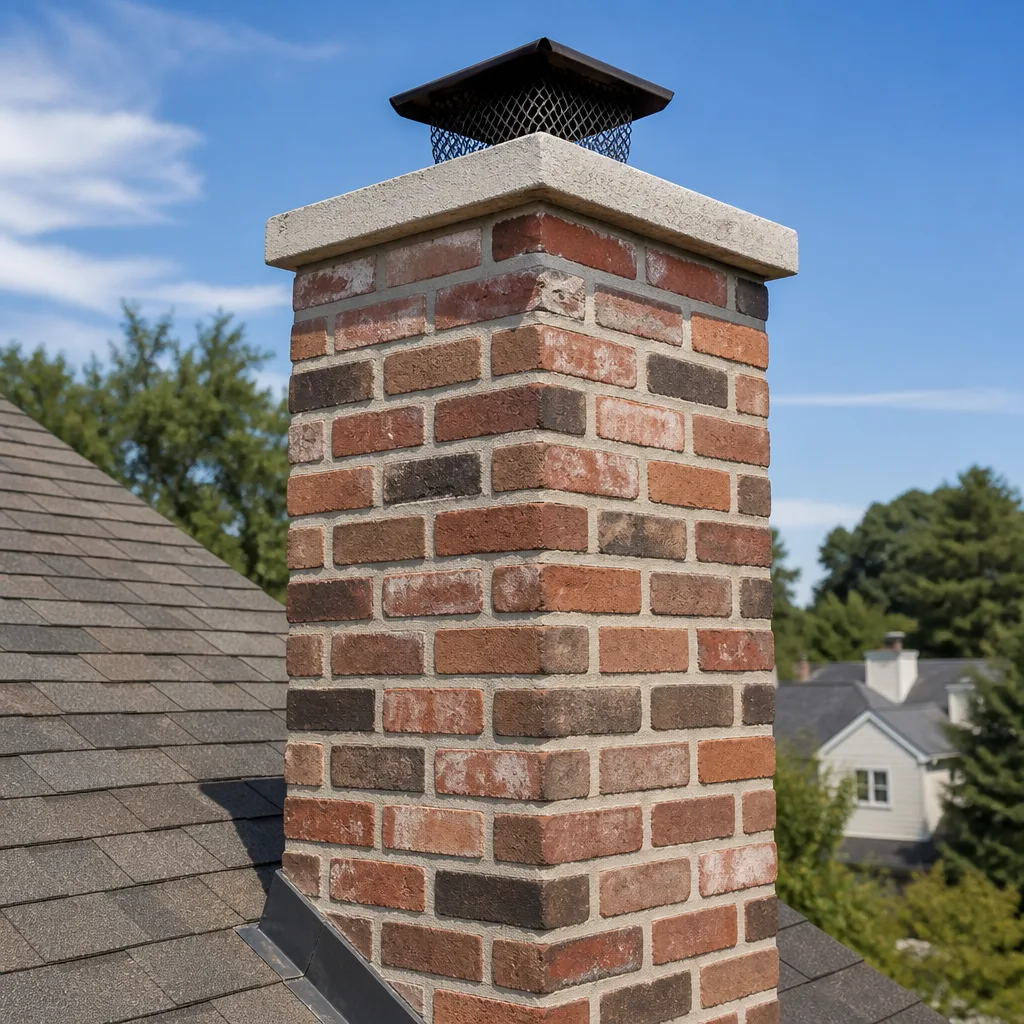 Masonry repair
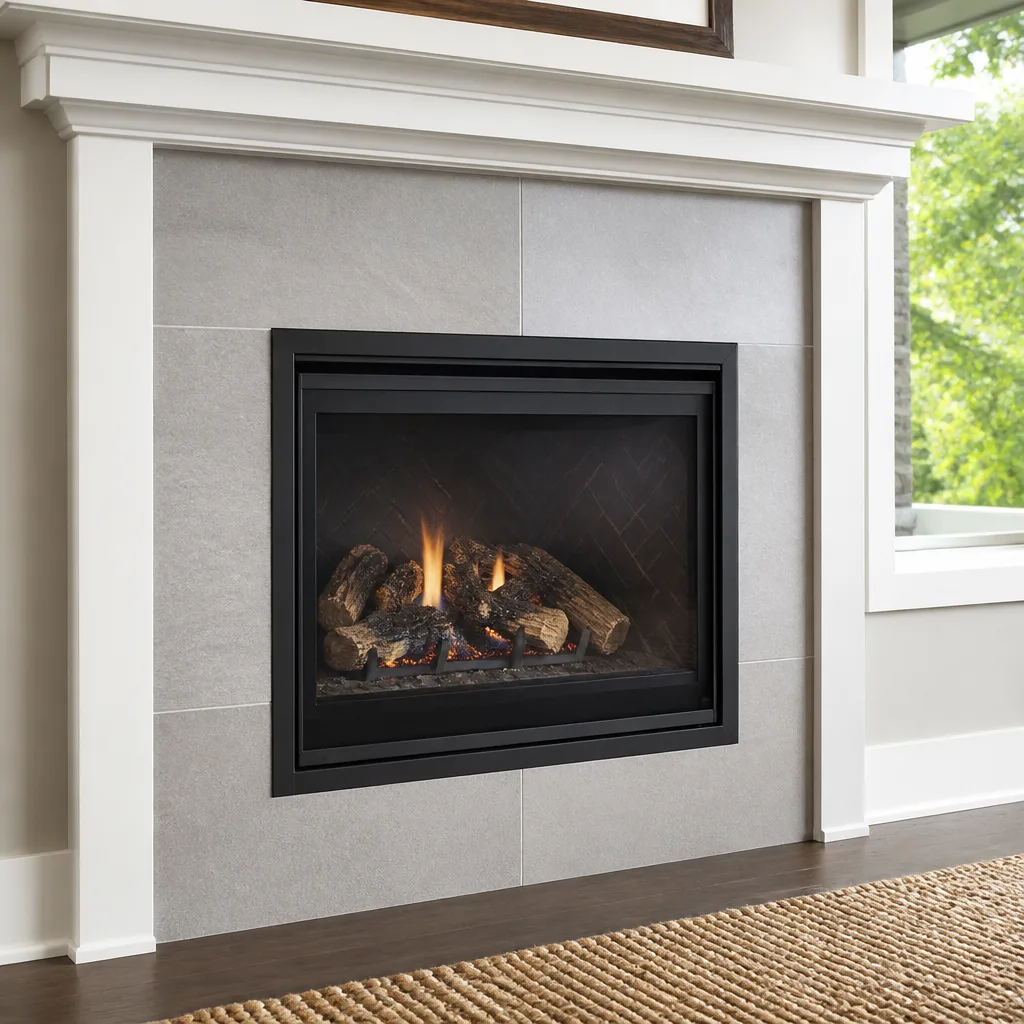 Gas fireplace service
Level 1 sweep and inspection to the NFPA 211 annual standard - flue, crown, cap, and flashing checked and photographed
Chimney sweep logs do not sweep chimneys. They loosen some creosote - which then falls where a brush and vacuum still have to collect it.
Chimney Cleaning Permits, Codes & Inspections in IL: What You Need to Know
Most Illinois homeowners assume a chimney sweep is like a haircut: you book it, it gets done, nobody files paperwork. That’s true for the cleaning itself. But a liner replacement completed without a permit in Illinois can surface as an unpermitted alteration during a home sale inspection, potentially delaying closing or requiring a retroactive inspection at the seller’s cost. We’ve watched this exact scenario play out in Belmont Cragin more than once, usually when a flipper cut corners years earlier and the current owner never knew. This guide breaks down exactly where the permit line sits for chimney work, which codes govern what, and the documentation you need to protect yourself. For Chimney Cleaning Warning Signs: A Belmont Cragin Homeowner’s Reference Guide, see our companion post.
Quick Answer
Routine chimney sweeping and inspection in Illinois requires no permit. However, structural repairs like flue liner replacement, firebox rebuilding, or chimney cap installation often do require a permit from your local municipality or the City of Chicago, depending on the scope of work and whether the chimney is being altered beyond its original condition.
Styles & brands we work with
Table of Contents
- Illinois Permit Rules: Cleaning vs. Alteration
- Illinois Building Codes That Apply to Chimneys
- City of Chicago vs. Suburban Cook County Requirements
- When a Level 2 Inspection Is Required
- How to Verify Your Contractor Actually Pulled the Permit
- Record-Keeping: What to Save After Any Chimney Work
- Belmont Cragin Specifics: What We See on the Job
- What Permits and Inspections Actually Cost in Illinois
Illinois Permit Rules: Cleaning vs. Alteration
Here is the line that matters: maintenance does not require a permit. Alteration does. Illinois has no statewide permit for chimney sweeping specifically, because sweeping removes soot and creosote from an existing flue without changing the chimney’s structure, materials, or function. You are not modifying anything. You are restoring it to its original operating condition. Municipalities across the state, including Chicago, follow this same logic.
What counts as alteration? Here is a straightforward list based on what building departments and fire code officials actually flag:
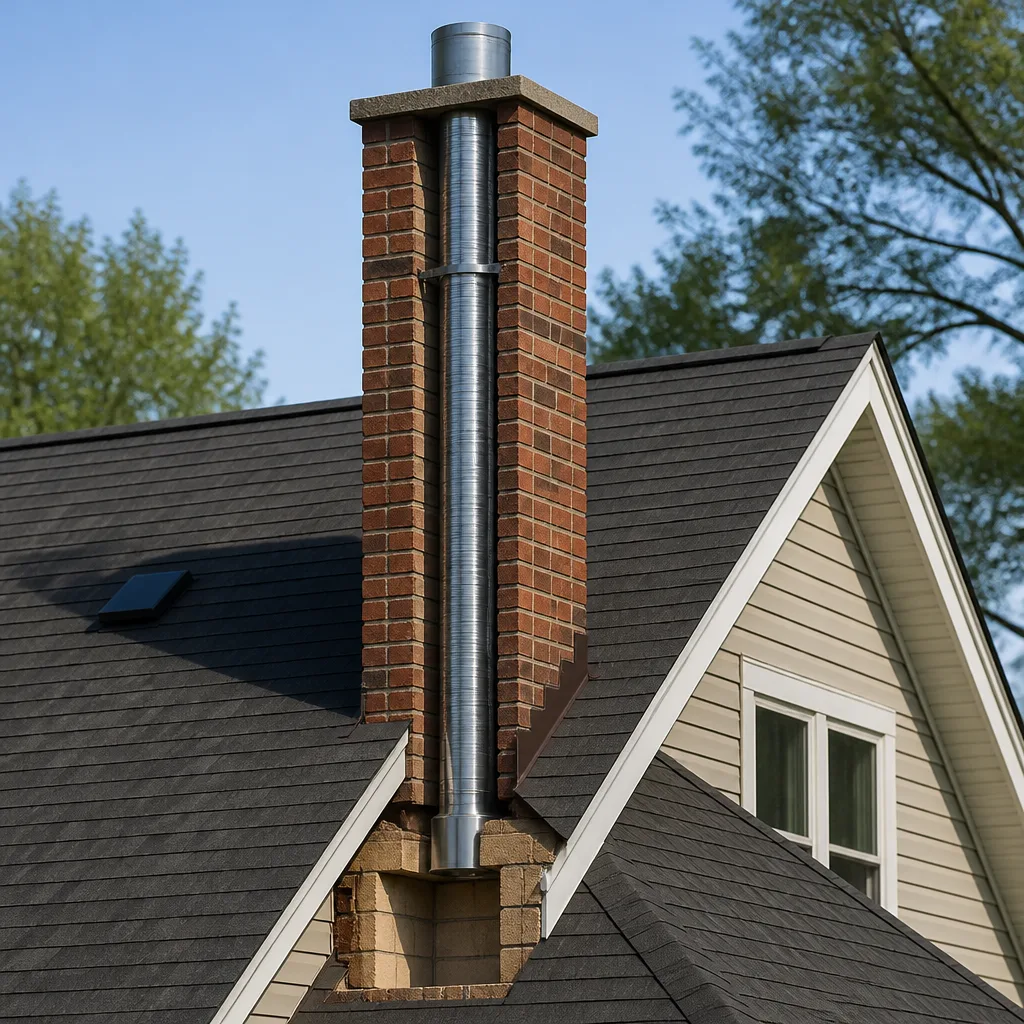
- Flue liner replacement or relining (stainless steel, cast-in-place, or clay tile replacement)
- Firebox rebuilding (new refractory panels alone are usually fine; rebuilding brick changes the structure)
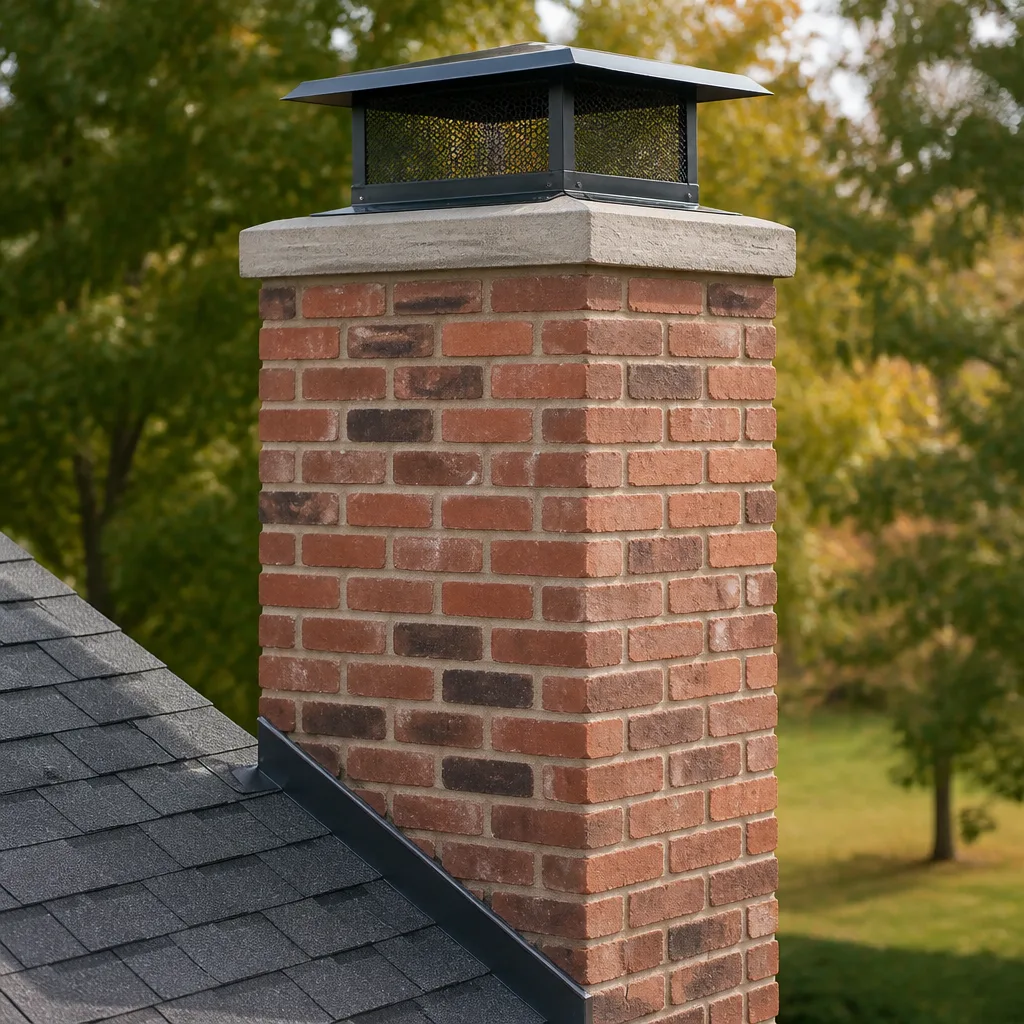
- Chimney cap installation that requires mounting brackets or flashing (a slip-in cap is generally maintenance)
- Chimney crown replacement (pouring a new concrete crown is structural)
- Partial or full chimney rebuild above the roofline
- Adding or extending a flue for a new appliance or fuel source
In Belmont Cragin and the surrounding Northwest Side, the housing stock is older. Brick chimneys from the 1920s through 1960s are the norm. We regularly encounter chimneys where some past owner did a liner replacement and never informed the city. When that house goes to sale, an inspector’s report may flag the work as unpermitted, and then the seller is on the hook to prove it was done to code. Sometimes it was, and the problem is only paperwork. Sometimes it was not, and the fix gets expensive quickly.
The practical takeaway: sweeping is maintenance, full stop. Repairs that involve changing out major chimney components are alterations, and you should ask your contractor before work starts whether a permit applies. A competent sweep will tell you without you having to ask.
Illinois Building Codes That Apply to Chimneys
Illinois is not a single-code state, but most municipalities adopt versions of the International Residential Code (IRC) and the International Fire Code (IFC). For chimneys specifically, the relevant references are IRC Chapter 10 (Chimneys and Fireplaces) and the International Fuel Gas Code (IFGC) sections covering venting for gas appliances. Chicago does things its own way with the Chicago Building Code, which draws from similar technical standards but has its own administrative rules.
Here are the code provisions that actually matter for homeowners, stripped of the legalese:
Chimney Liner Materials
The IRC specifies what materials are acceptable for flue liners: clay tile, stainless steel listed to UL 1777, or listed cast-in-place systems. Chicago’s code is similar. When we install a DuraFlex liner in Belmont Cragin, it is a UL 1777 listed stainless steel liner, which is exactly what the code references. A contractor quoting unlisted pipe to save money is quoting a failed inspection.
Liner Sizing
Code requires the flue to be sized to the appliance it serves. An oversized flue for a gas furnace creates slow draft and condensation issues. The IFGC has specific sizing tables. A sweep who says “close enough” is not complying with Illinois building code.
Clearance to Combustibles
The IRC mandates minimum air space between the exterior of a masonry chimney and any wood framing. In older Belmont Cragin homes, we sometimes find framing in direct contact with the chimney, which is a code violation and a genuine fire hazard. This gets flagged in inspections routinely.
These code provisions matter for one practical reason: when an inspector reviews chimney work, they check materials, sizing, and clearances. If something seems off, our Chimney Sweep Troubleshooting: Common Problems and How to Fix Them can help you spot red flags early. If you know what they are checking, you know what questions to ask your contractor before the work begins.
City of Chicago vs. Suburban Cook County Requirements
Chicago is stricter than most of suburban Cook County on chimney work, but the difference is administrative, not technical. Both require permits for alterations. Chicago just enforces it more consistently, because the Department of Buildings has more inspectors per square mile and more resources for permit verification.
In the City of Chicago:
- Chimney liner replacements require an Easy Permit process through the Department of Buildings in many cases, not a full architectural permit
- Firebox rebuilds and crown replacements generally require a permit and a final inspection
- Dishonest contractors quote work without permits because the permit adds a few days to the timeline and reveals their lack of license to the city
In suburban Cook County municipalities like Oak Park, Evanston, or Berwyn, each village has its own permit threshold. Some allow liner replacements under a residential repair permit with no plan review. Others require documentation that the liner is UL listed and installed to the manufacturer’s instructions. Almost all require some form of final inspection on alteration work.
What surprises Belmont Cragin homeowners most is that Chicago treats a liner replacement on a multifamily building differently than on a single-family home. Three flats and larger buildings trigger commercial or multi-unit review rules. We see this constantly: a landlord replaces a liner in a two-flat without a permit, and the city flags it when there is a separate complaint or a sale.
When a Level 2 Inspection Is Required
The Chimney Safety Institute of America (CSIA) defines three inspection levels. Level 1 is the standard visual check done during a routine sweep. Level 2 adds video scanning of the flue interior and is required under specific conditions that go beyond routine maintenance. Level 3 involves opening up portions of the chimney or structure to access concealed areas.
A Level 2 inspection is triggered when any of these events occur:
- Property sale or transfer: Many home inspectors recommend or require it before closing
- A chimney fire has occurred: You must verify the flue survived the event
- The chimney is being converted for a new appliance or fuel type: Switching from wood to gas, or from a fireplace to a gas insert
- Structural damage is suspected: Earthquake, lightning strike, vehicle impact, or visible masonry cracking
- Insurance company requirements: Some Illinois insurers require a Level 2 after a claim or as a condition of coverage on older homes
Municipal fire code in some Illinois jurisdictions also references CSIA inspection levels after a reported chimney fire. This is common in suburbs with stricter fire prevention offices. In Belmont Cragin, after a chimney fire the Chicago Fire Department may issue a notice requiring a certified inspection before the fireplace can be used again. A Level 2 scan with a video camera produces the documentation they want to see.
Insurance companies are another trigger. Some carriers now require a Level 2 inspection with video documentation before writing a policy on a home with a wood-burning fireplace that is over 50 years old. The age of the housing stock in Belmont Cragin makes this more common here than in newer suburban developments.
How to Verify Your Contractor Actually Pulled the Permit
Some contractors do not pull permits because permits add cost and time. A liner replacement job quoted with a permit might run $200 to $400 more than the same job without one. The cheap bid wins the job, the work gets done, and nobody checks anything. The homeowner learns about it years later when a sale stalls or an insurance claim gets complicated.
Here is a simple verification process we recommend to any Belmont Cragin homeowner:
- Ask before the work starts: “Will this require a permit, and will you pull it?” Get the answer in writing on the estimate.
- In Chicago, check the Department of Buildings website: Search the address for recent permit activity. It is a public database.
- In the suburbs, call the village building department: They will tell you if a permit was applied for at that address within minutes.
- Ask for the permit number: After approval, your contractor should provide it. A contractor who hesitates is telling you something.
- Ask who handles the final inspection: The permit is not complete until the work passes inspection. If no inspection happens, the permit is open.
We have seen unpermitted liner work flagged during home sales in Belmont Cragin. The seller then has to pay for a retroactive inspection, and if the work does not pass, the buyer walks or demands a credit. A permit is cheap insurance against that outcome.
Why do some contractors avoid permits? In Chicago, pulling a permit requires a valid license on file with the city. An unlicensed contractor physically cannot pull a permit. Their bids come in lower because they are operating outside the system. When the work has problems, the city will not help you because, from their perspective, no contractor ever touched that chimney.
Record-Keeping: What to Save After Any Chimney Work
The homeowner who keeps good records sails through resale inspections and insurance renewals. The homeowner who kept nothing ends up paying for repeat inspections and sometimes repeat repairs. Here is the documentation kit we recommend after any chimney work, from a basic sweep to a full liner replacement:
- Invoice with itemized work description: What was done, what materials were used, what date it happened
- Before and after photos or video: Especially relevant for liner work and firebox repairs
- Level 2 inspection reports with video: If you had one done, keep the report and the video file
- Permit documentation: Permit number, approval date, final inspection sign-off
- Manufacturer documentation for any installed components: Liner warranty cards, cap product sheets, refractory panel specs
- Sweep frequency records: A dated log of every cleaning shows maintenance history to insurers and buyers
For fire marshal purposes, keeping sweep records matters after any chimney incident. If you report a chimney fire and the fire department asks when the chimney was last cleaned, a dated invoice is the difference between a resolved case and an open investigation. For resale in Belmont Cragin, where many homes change hands between families who have owned them for decades, strong records make the difference between a smooth closing and a last-minute inspection contingency.
Belmont Cragin Specifics: What We See on the Job
Belmont Cragin has a particular chimney profile. The housing stock is dominated by Chicago bungalows and two-flats built between roughly 1915 and 1955. The chimneys are almost always interior masonry, which is actually better for draft and structural stability than exterior chimneys, but they have specific failure patterns tied to age and the freeze-thaw cycles Chicago winters impose.
Here is what we repeatedly see in Belmont Cragin chimneys:
- Spalling brick in the attic section: Warm interior air meets cold attic air, and moisture condenses inside the brick. Repeated years of this break down the mortar from the inside out.
- Clay tile liners cracked at the roofline: The section above the roof experiences the most aggressive temperature swings. Clay tile cracks along vertical joints there first.
- Improperly terminated or absent caps: A surprising number of chimneys in this area lack proper caps, which lets rain and animals in. This shows up as rusted dampers and water-stained fireboxes.
- Gas furnace venting through old masonry chimneys without proper liners: Many Belmont Cragin homes had coal or wood-burning systems converted to gas decades ago. The old clay tile liner was never properly sized or replaced for gas exhaust, which creates condensation problems that eat the mortar from inside.
These are not code violations created by neglect alone. They are the natural end of a service life for 70 to 100-year-old chimneys. When we scope a chimney in this neighborhood and find a liner in terminal condition, the conversation is about whether a restore, not a replace, makes sense. HeatShield is one option for flue resurfacing; a full reline with a stainless system like DuraFlex is another. The code line between maintenance and alteration applies here as everywhere else, but the realistic service life discussion matters more to a homeowner on the Northwest Side than the permit conversation does.
Belmont Cragin also sits in a part of Chicago where accessory dwelling units and basement apartments are common in two-flats and three-flats. Chimney work on a building with multiple dwelling units triggers different code treatment, as mentioned above. If you own a Belmont Cragin two-flat and one unit has a fireplace or a gas furnace venting through the shared chimney, that is a multi-unit code situation. The permit process is not dramatically harder, but it is different, and an experienced local contractor should know how to navigate it.
What Permits and Inspections Actually Cost in Illinois
Permit fees are smaller than most homeowners expect. The real cost is time and the possibility of a failed inspection that requires rework. Here are realistic ranges based on what we see across Chicago and Cook County:
- Chicago Easy Permit for a liner replacement: Typically $100 to $300 depending on scope, plus inspection fees
- Suburban Cook County residential repair permit: $50 to $250 for chimney alteration work
- Level 2 chimney inspection: $200 to $500 for a standard single-flue chimney with video, depending on access
- Retroactive permit and inspection after the fact: Usually 2 to 3 times the original permit cost, plus any corrective work required
The last line is the one that stings. Failing to pull a $100 permit for a liner replacement can become a $500 retroactive permit plus $2,000 in corrections if the original work does not match current code. That happens more than most homeowners would like to believe, and it happens specifically in neighborhoods like Belmont Cragin where unpermitted flipper work was common during the 2000s boom.
Common Mistakes to Avoid
- Treating all chimney work as maintenance: Sweeping is maintenance. Liner replacement, firebox rebuilds, and crown replacement are alterations. Assuming everything is maintenance can leave you with an open permit violation you do not know exists until resale.
- Working with contractors who avoid the permit conversation: If your contractor quotes a liner replacement without mentioning a permit, ask why. In Chicago, there is only one reason a licensed contractor avoids discussing it: they do not want to pull it.
- Failing to keep sweep and repair records: Insurance companies and fire marshals ask for documentation. A verbal assurance that you had the chimney cleaned two years ago is not documentation.
- Skipping the Level 2 inspection after a chimney fire: A chimney fire can damage the flue in ways invisible from the outside. Using the fireplace again without a documented Level 2 inspection is a genuine fire safety risk and a code exposure.
- Accepting unlisted liner materials: Some cheap liners are not UL 1777 listed. They may work initially, but they will not pass an inspection, and they void any insurance claim that involves the chimney.
- Ignoring permit requirements on a multi-unit building in Chicago: Belmont Cragin two-flats and three-flats fall under different rules than single-family homes. What flies on a bungalow may not fly on a two-flat.
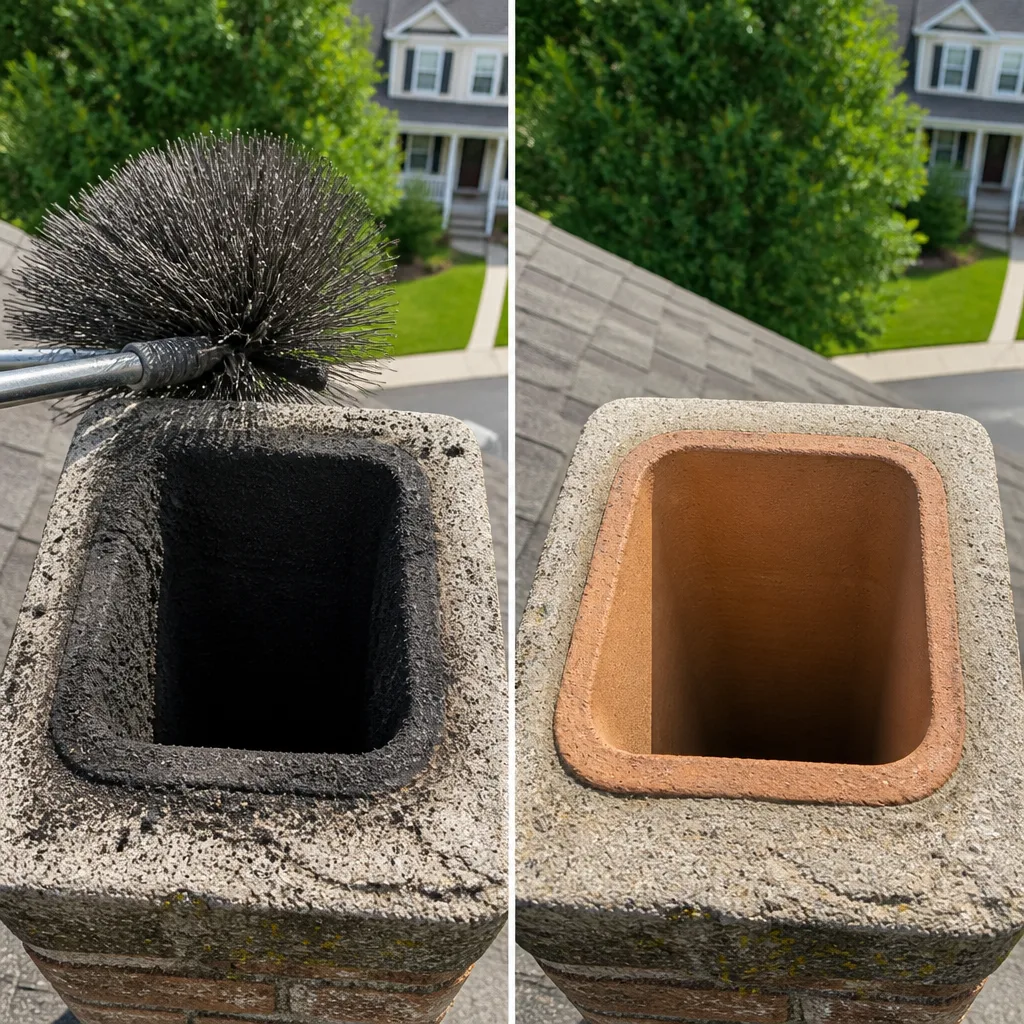
See the difference
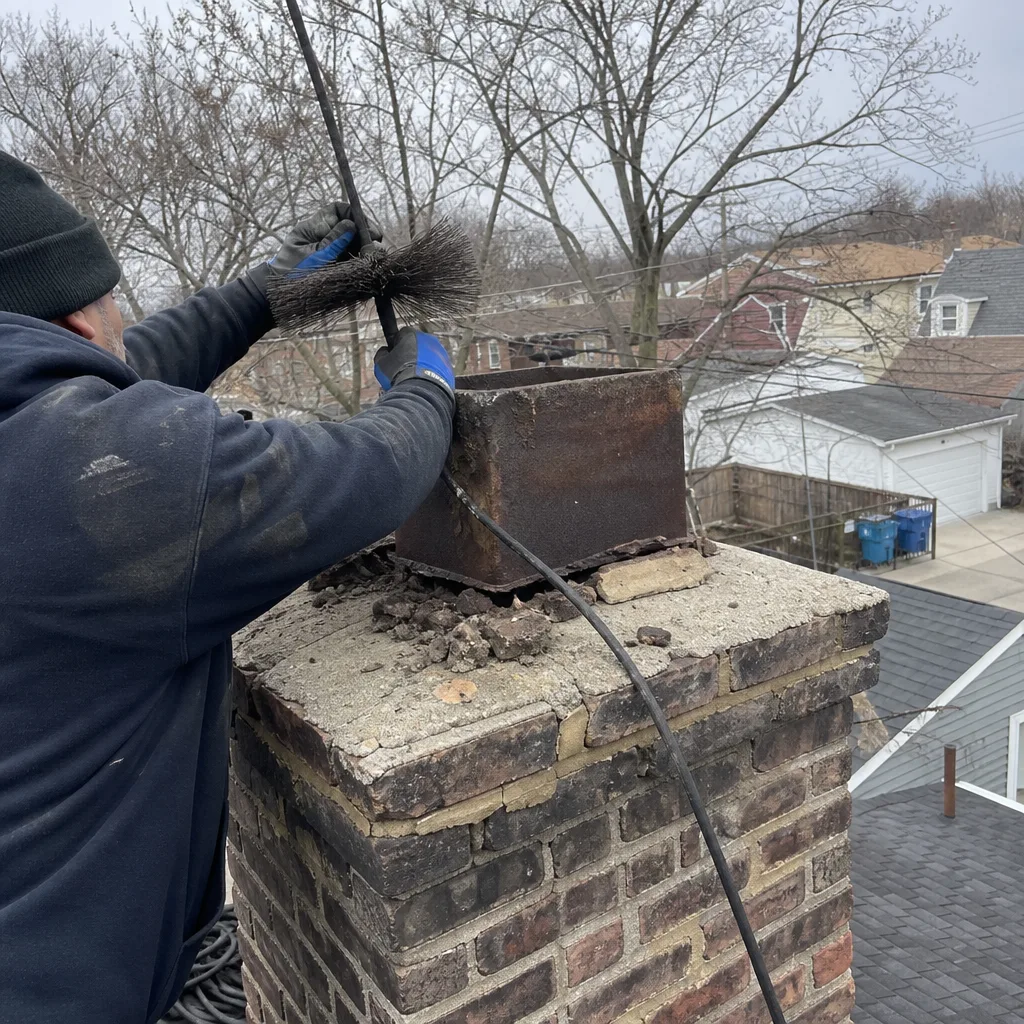 Before
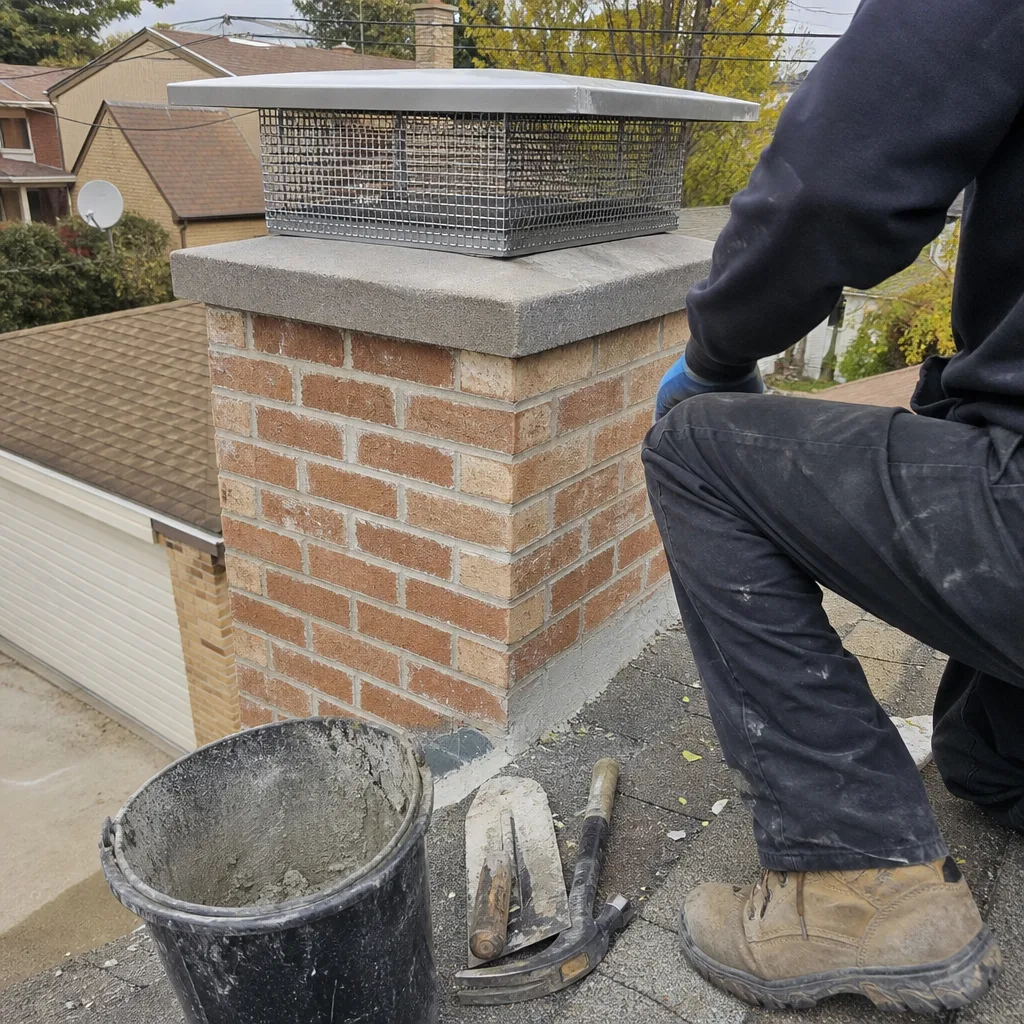 After
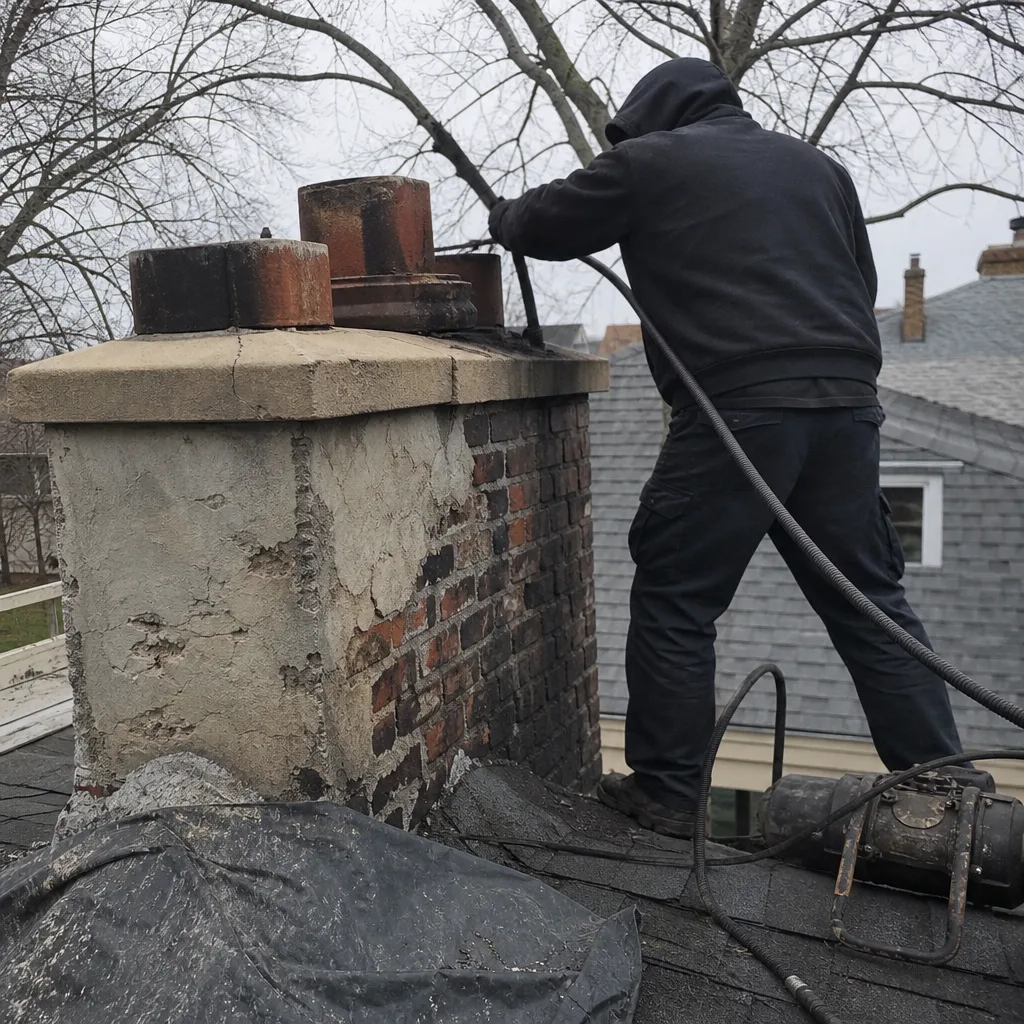 Before
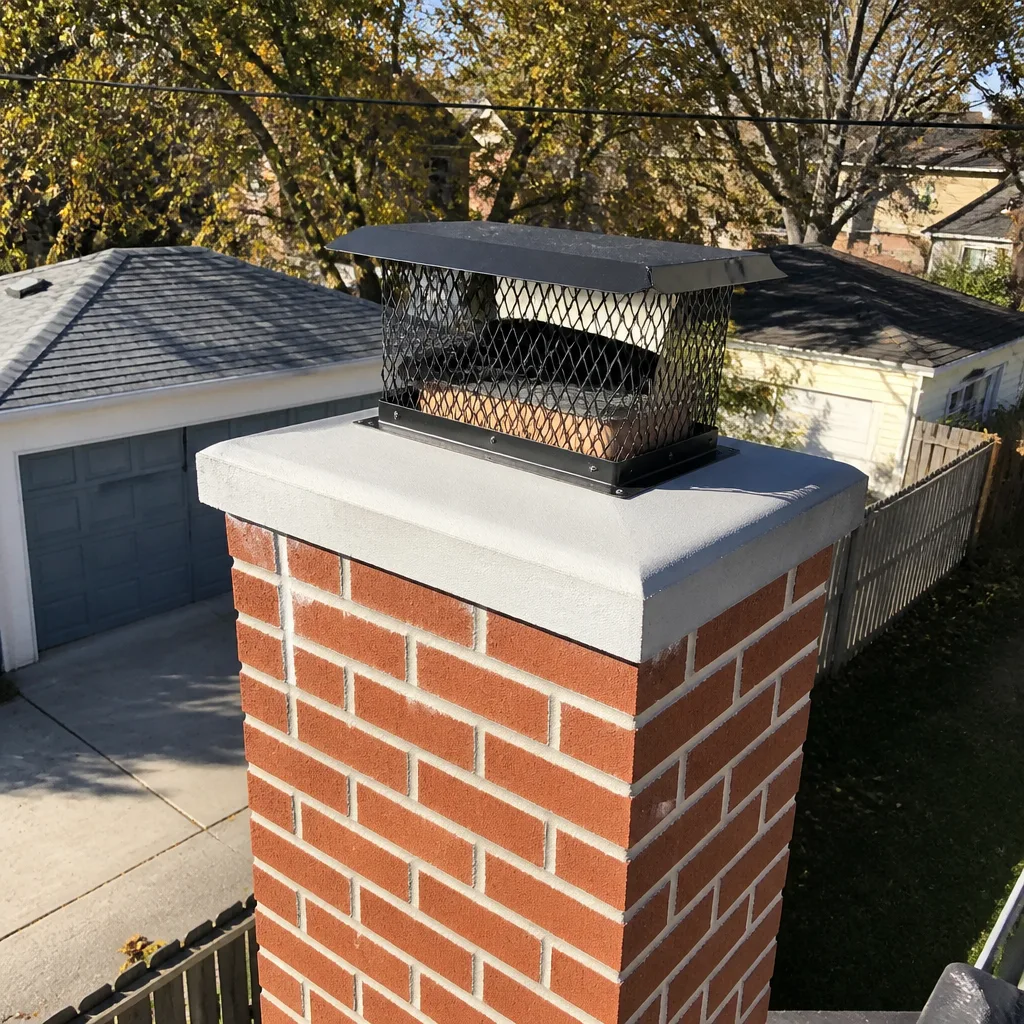 After
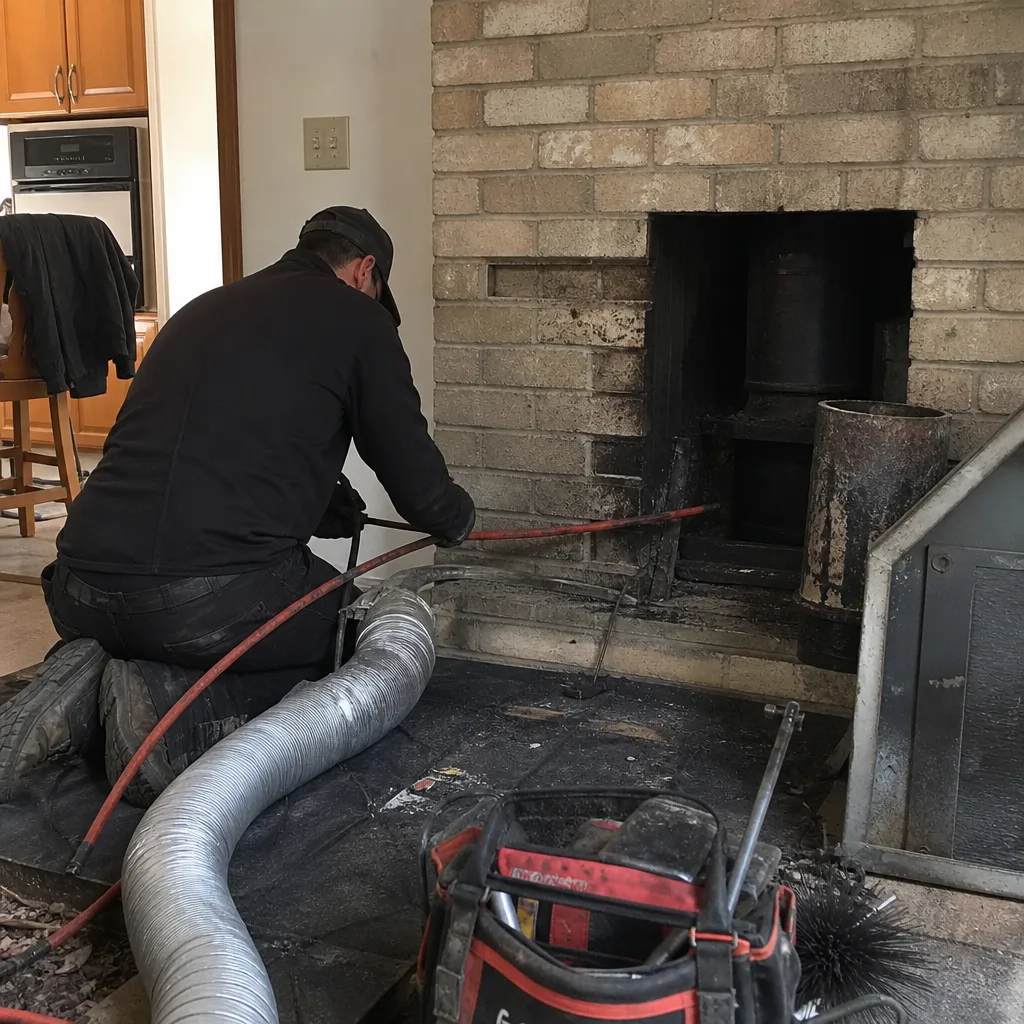 Before
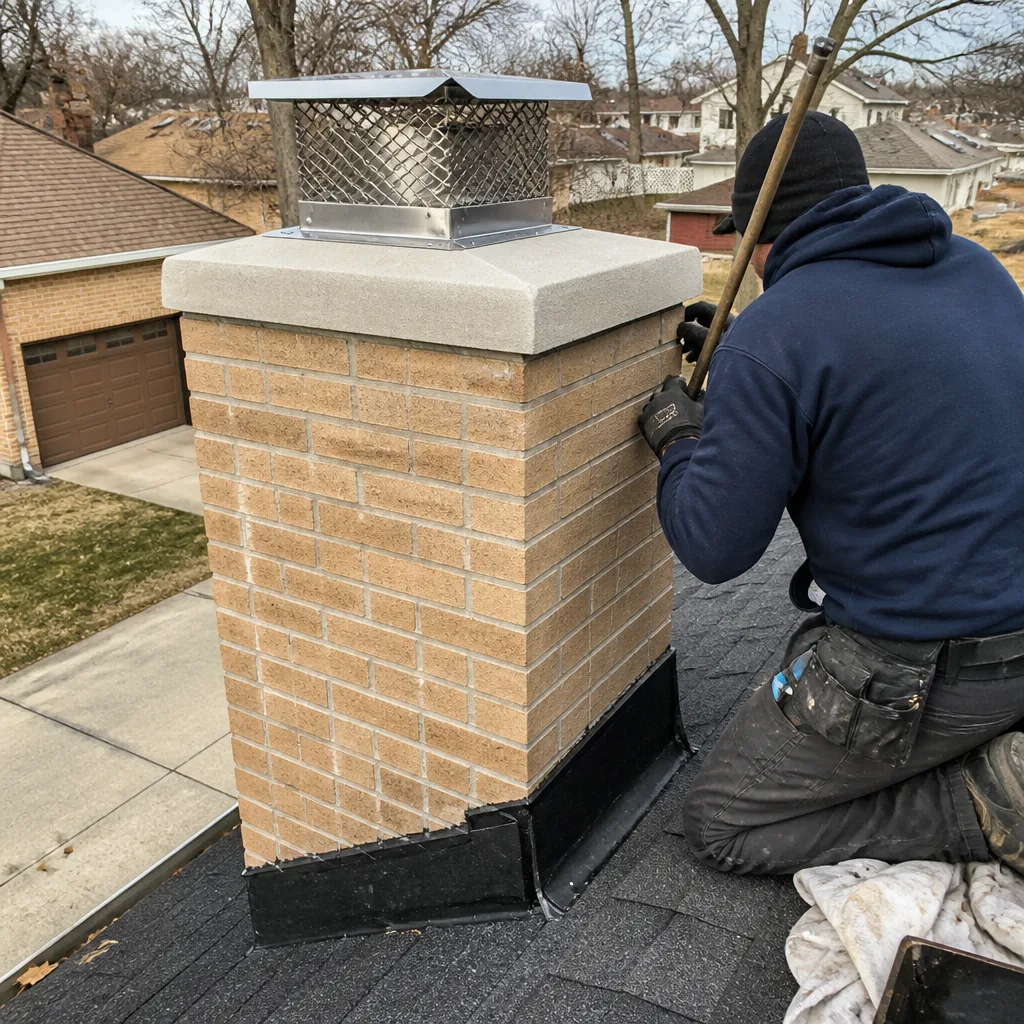 After
When to Call a Professional
If you are unsure whether your chimney work requires a permit in Illinois, the fastest way to resolve it is to ask a contractor who pulls permits regularly. You need someone who can scope the flue, tell you what the code actually requires for your situation, and handle the paperwork correctly the first time. You need a professional if you have experienced a chimney fire, if your liner is cracked or spalling, if you are switching fuel types, or if a home inspector flagged something during a pending sale. We see all of these situations regularly in Belmont Cragin. Crossroads Chimney Sweep offers free estimates in Belmont Cragin. Call (877) 265-6720 and we will tell you exactly what your chimney needs, and whether a permit is part of the job.
Frequently Asked Questions
No. Routine chimney sweeping and Level 1 inspections are classified as maintenance and do not require a permit anywhere in Illinois, including Chicago and suburban Cook County. What requires a permit is alteration work like liner replacement, firebox rebuilding, or chimney crown replacement.
There is no permit for chimney cleaning itself. If your chimney requires alteration work that needs a permit, typical fees range from $50 to $300 depending on the municipality and the scope of the work. Retroactive permits cost more, so pulling the right permit the first time is always cheaper.
Unpermitted chimney work can be flagged during a home sale inspection and may delay closing or require a retroactive inspection at the seller’s cost. If the work does not pass inspection, the seller typically has to pay for corrections or negotiate a credit with the buyer. This is a common issue in Belmont Cragin where older homes have had multiple rounds of past work done over decades.
Illinois does not mandate a Level 2 inspection before sale, but many home inspectors recommend one, and some insurance companies require one before issuing a policy on an older home with a fireplace. If your home has had a chimney fire, a Level 2 inspection is strongly recommended and may be required by fire code in some jurisdictions.
Illinois building codes reference UL 1777-listed stainless steel liners, clay tile, and listed cast-in-place systems as acceptable flue liner materials. Stainless steel liners like DuraFlex meet the UL 1777 standard and are commonly installed in Chicago and Belmont Cragin homes when the original clay tile liner has failed.
The Chimney Safety Institute of America recommends a cleaning and inspection whenever creosote reaches 1/8 inch of buildup, which for most wood-burning fireplaces in regular use means once per year. Homes in Belmont Cragin that burn wood through Chicago winters should schedule a sweep annually before burning season begins, and should also have the chimney inspected if they use a gas furnace vented through the same flue.
The Bottom Line
Illinois keeps chimney rules simple at the top level: cleaning is maintenance, alteration is regulated. The complexity hides in the details, which is where homeowners get caught. Know which category your planned work falls into. Ask your contractor directly about permits and do not accept a vague answer. Keep records after every chimney job, from a basic sweep to a full reline. In Belmont Cragin, where most chimneys are 70 years old or older, the line between “still working” and “needs alteration” is crossed constantly, and knowing the rules before you cross it saves you money on the back end. A flue liner properly permitted, properly installed, and properly documented is a home asset; the same liner installed without paperwork becomes a liability at resale. Explore more guides & resources to stay ahead of chimney issues in Chicago’s older housing stock.
For a thorough inspection of your chimney in Belmont Cragin, including video scanning and a straight answer about what your chimney actually needs, call Crossroads Chimney Sweep at (877) 265-6720. We handle sweeps, repairs, and dryer vent cleaning from one truck, and we will tell you plainly whether a permit is part of your job.
Written by the team at Crossroads Chimney Sweep, serving Belmont Cragin since 2014.