Last updated October 31, 2026
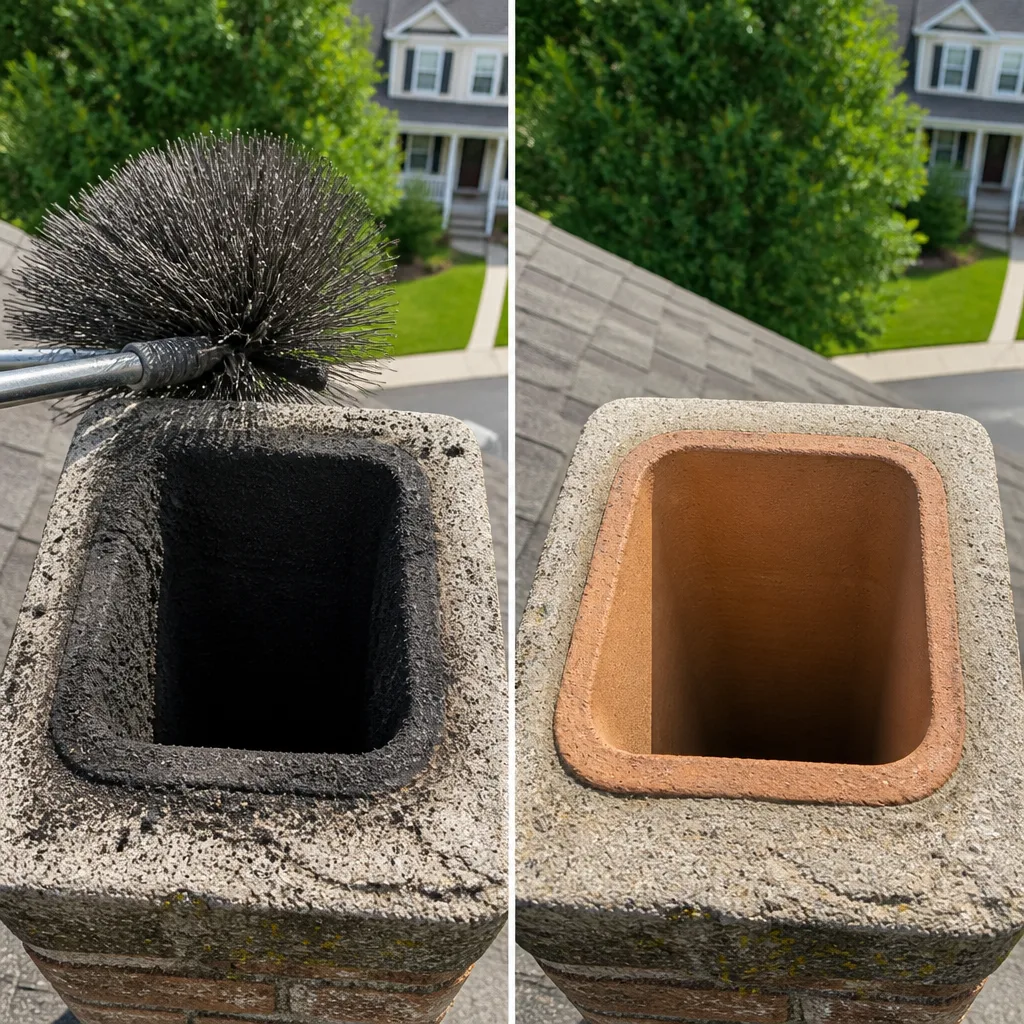 Sweep & inspection
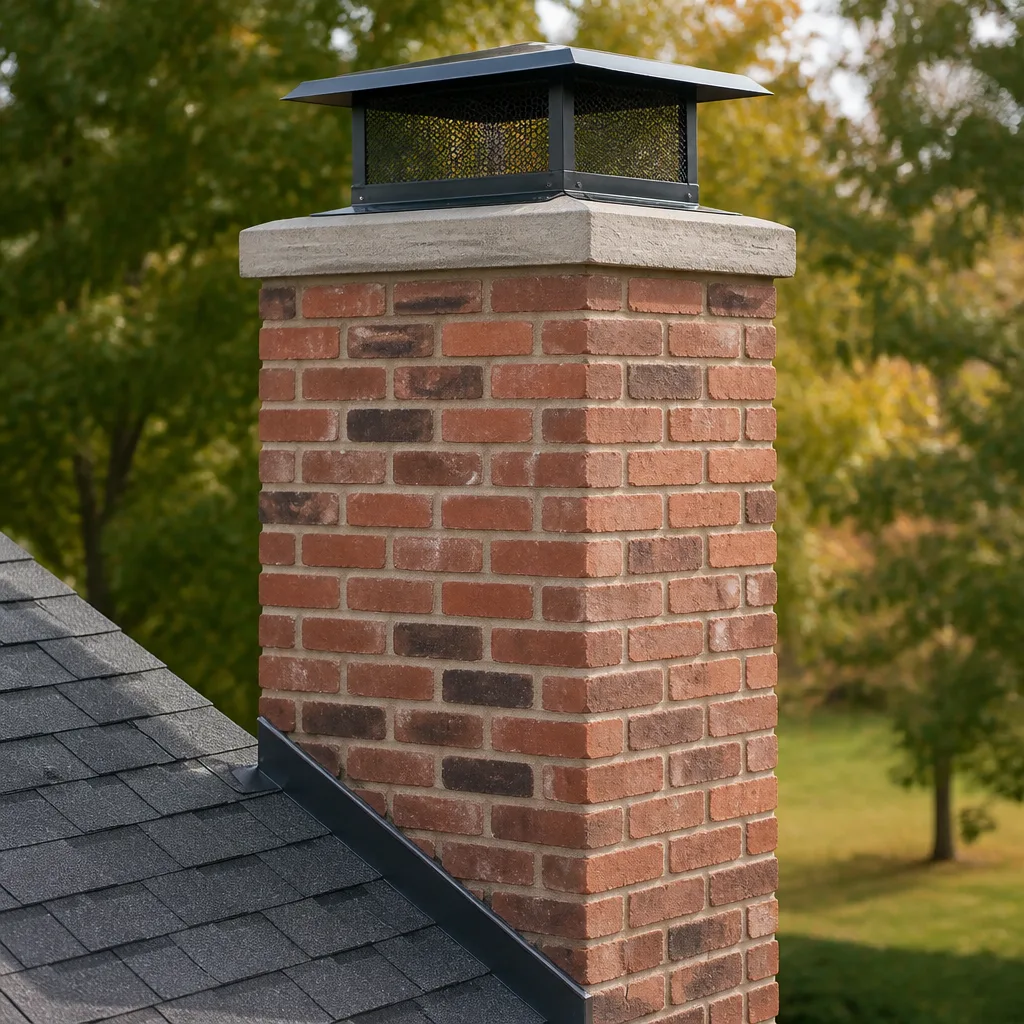 Caps & crowns
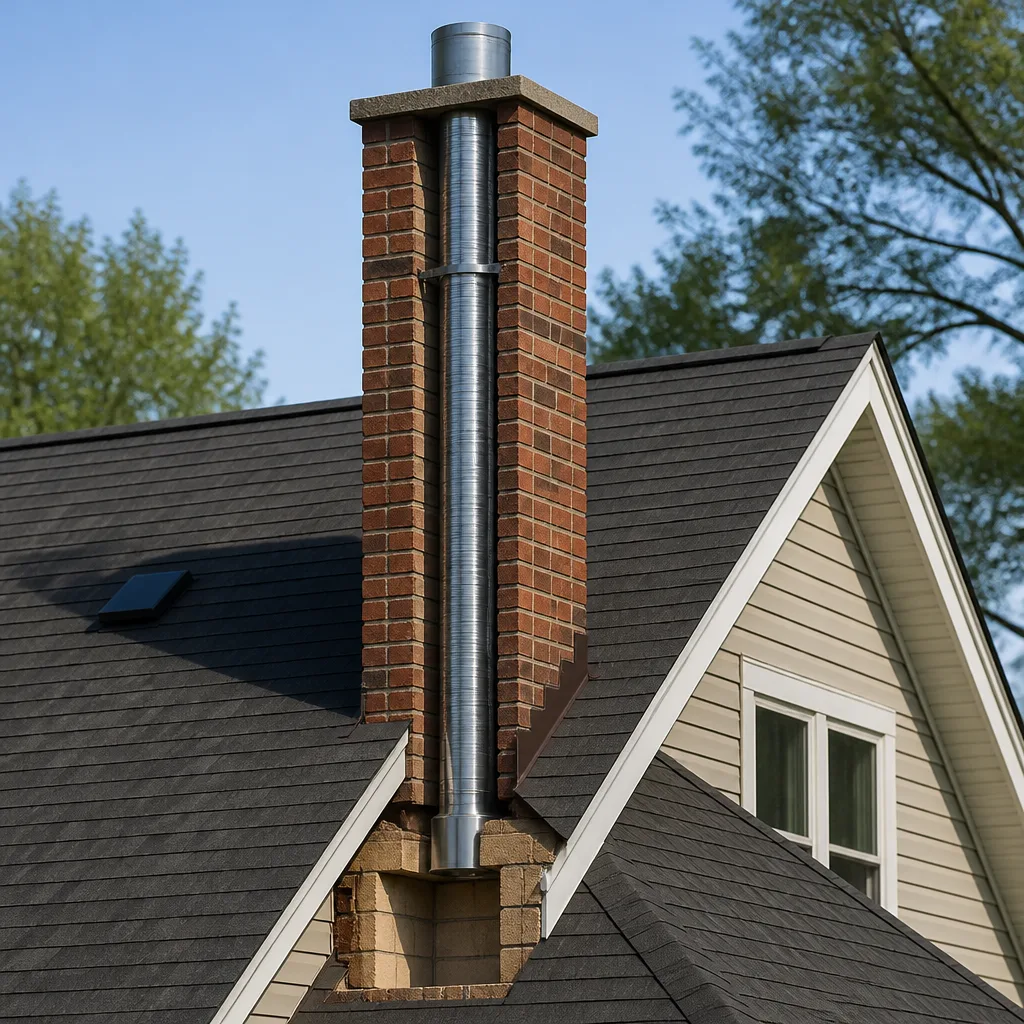 Flue relining
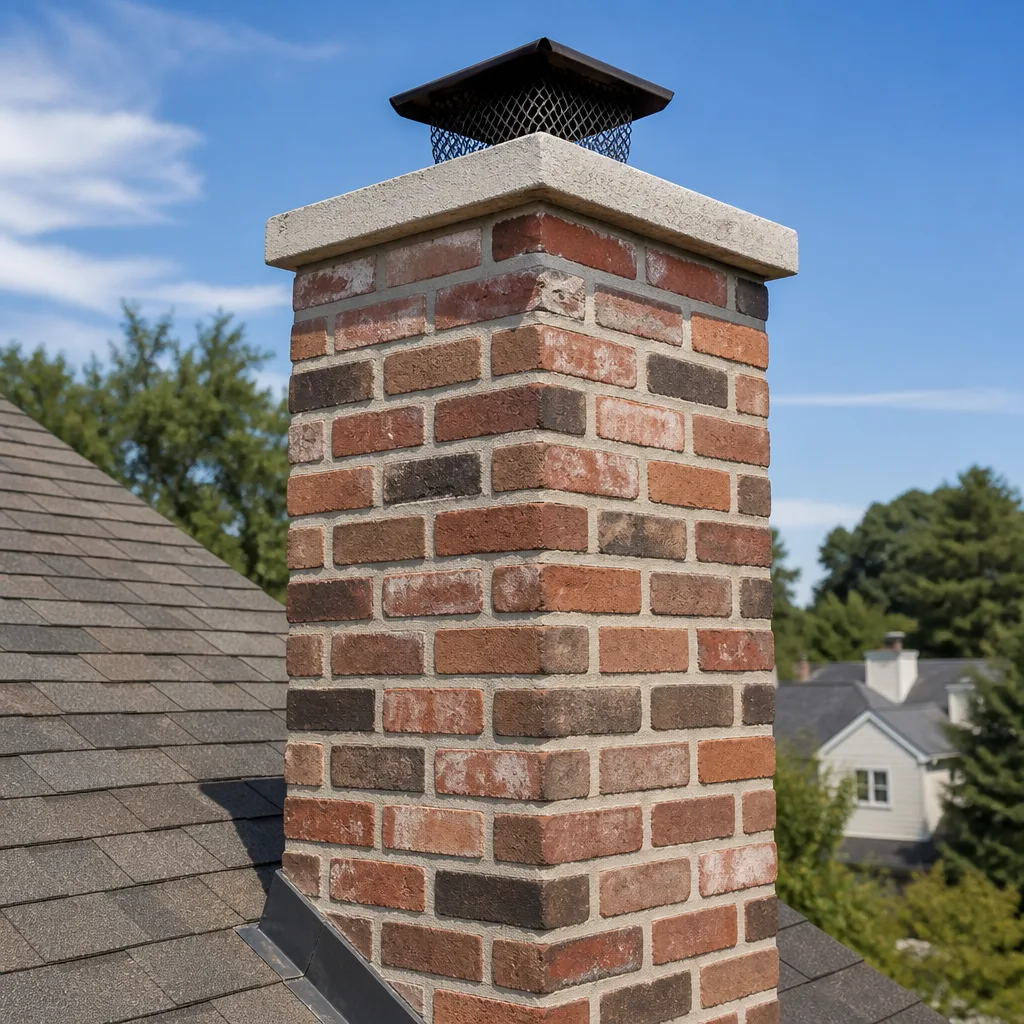 Masonry repair
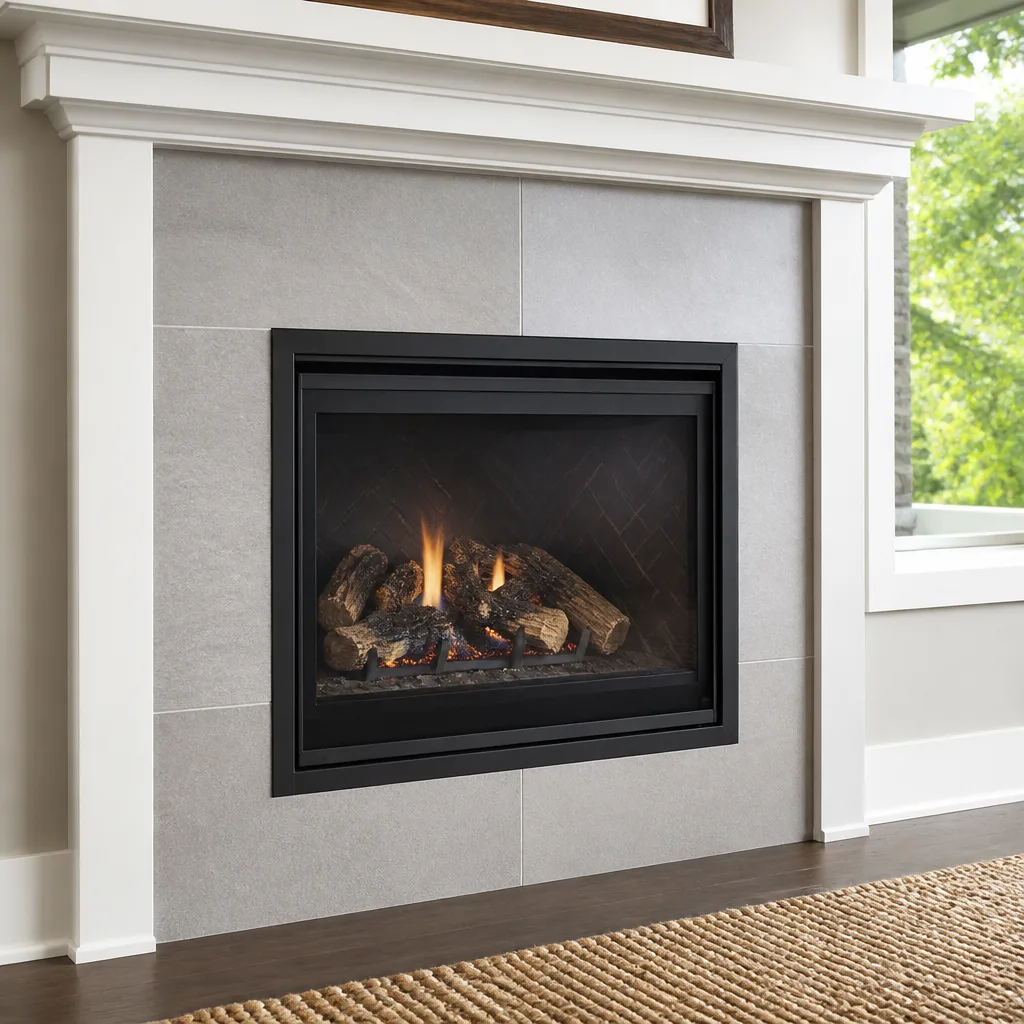 Gas fireplace service
Level 1 sweep and inspection to the NFPA 211 annual standard - flue, crown, cap, and flashing checked and photographed
Chimney sweep logs do not sweep chimneys. They loosen some creosote - which then falls where a brush and vacuum still have to collect it.
Chimney Sweep Maintenance Checklist for Belmont Cragin Homeowners
Here’s a statistic that surprises most homeowners we talk to: people who can name the specific parts of their chimney before a sweep arrives are far less likely to be oversold on repairs they don’t need. Not because they’re experts, but because they know what questions to ask. A chimney has roughly seven distinct components that a thorough chimney sweep should inspect, and most homeowners in Belmont Cragin couldn’t name three of them. This guide fixes that. You’ll learn exactly what goes on a proper maintenance checklist, what each item actually means, and how to spot the difference between a real problem and an upsell.
Quick Answer
A proper chimney maintenance checklist in Belmont Cragin covers seven components: the crown, cap, flashing, liner, firebox, damper, and the flue itself. A qualified sweep should inspect all seven during every visit, document their condition in writing, and flag anything that needs monitoring versus anything that needs immediate repair. You can visually check about three of these from the ground before the sweep even arrives.
Styles & brands we work with
Table of Contents
- 1. The Chimney Crown: Your First Line of Defense
- 2. The Chimney Cap: Small Part, Big Job
- 3. Flashing: Where Leaks Actually Start
- 4. The Liner: What’s Happening Inside the Flue
- 5. The Firebox: What the Fire Actually Touches
- 6. The Damper: The Part Everyone Forgets
- 7. Gas Inserts vs. Wood-Burning: Different Checklists
- 8. Using Your Checklist as a Service Record
1. The Chimney Crown: Your First Line of Defense
The crown is the concrete or mortar slab that sits on top of the chimney, sealing the gap between the flue liner and the brick. When it’s intact, water runs off the chimney and onto the roof. When it cracks, water seeps into the masonry and starts the freeze-thaw cycle that breaks bricks apart.
That cycle matters more in Belmont Cragin than homeowners realize. Chicago winters subject chimneys to temperature swings that go from single digits to above freezing and back within a week. Each swing forces water deeper into any crack, freezes, expands, and widens it. What starts as a hairline crack in November becomes a structural problem by March.
What your sweep should check:
- Hairline cracks across the crown surface (watch for dark lines that stay after rain)
- Spalling, or chipping, along the crown edges
- Whether the crown overhangs the brick by at least two inches (a flush crown lets water run straight down the face of the chimney)
- Whether a proper drip edge exists to keep water away from the brick course
What you can see from the ground: Look for dark staining on the upper brick, efflorescence (white mineral deposits), or brick faces that look like they’re shedding layers. All three indicate water is getting past the crown.
2. The Chimney Cap: Small Part, Big Job
A chimney cap is a metal cover that sits above the flue opening. It keeps rain, snow, leaves, and animals out. In Belmont Cragin, where raccoons and squirrels treat uncapped chimneys as prime real estate, the cap is arguably the most cost-effective component on the entire chimney.
The most common call we get about caps is a homeowner who heard scratching in the fireplace. The second most common is a homeowner whose cap rusted through and started spitting rust flakes onto the crown. Both are easy to fix if caught early.
Checklist items for the cap:
- No rust-through or holes in the metal mesh
- The mesh is tight enough to keep out birds and squirrels (openings no wider than five-eighths of an inch)
- The cap is still attached securely; wind and ice can shift it over time
- The spark arrestor function is intact, especially for wood-burning fireplaces
If you heat with wood, the cap should meet local code for spark arrestors. If you don’t have a cap at all, that’s a priority fix, not a maybe. The cost of a cap is a rounding error compared to the cost of removing a dead animal or repairing water damage inside the flue.
3. Flashing: Where Leaks Actually Start
Flashing is the metal that connects the chimney to the roof. When homeowners call about a leak and point at the chimney, more than half the time the problem is at the flashing, not the chimney itself. Water runs down the roof, finds a gap in the flashing, and works its way inside.
The tricky part with flashing in Belmont Cragin homes is age. Many of the neighborhood’s housing stock dates to the early-to-mid 20th century, and the original flashing has outlived its usefulness. It’s not that the material was bad. It’s that nothing lasts forever, especially not metal exposed to Chicago weather for 70 or 80 years.
What failure looks like:
- Rusted, corroded, or missing metal
- Sealant that’s cracked, dried, or peeling away from the joint
- Gaps between the flashing and the brick that you could slide a credit card into
- Water stains on ceiling areas near the chimney chase
A note on repairs: Flashings use one of two methods – step flashing for sloped roofs or counter-flashing set into mortar joints for brick chimneys. The counter-flashing should be cut into the mortar, not just surface-caulked. The right material for the right repair matters here. If a sweep says the flashing needs work, ask them to point to the exact gap. If they can’t show you the problem, check our Chimney Sweep Troubleshooting: Common Problems and How to Fix Them or get a second look before you sign anything.
4. The Liner: What’s Happening Inside the Flue
The liner is the vertical passageway that carries smoke and exhaust out of your home. It’s also the part of the chimney you can’t see from the ground, can’t inspect on your own, and absolutely cannot ignore. A damaged liner is how chimney fires start and how carbon monoxide finds its way back into living spaces.
Liners come in three basic materials: clay tile (common in older Belmont Cragin homes), cast-in-place, and metal, either rigid or flexible. Each has a lifespan, and none of them last forever. Clay tile liners crack under the same freeze-thaw stress that damages crowns. Metal liners eventually corrode. When any liner fails, the chimney becomes a fire risk and a carbon monoxide risk simultaneously.
Checklist items for liner inspection:
- Any visible cracks, gaps, or missing sections in clay tile
- Corrosion, rust-through, or seams pulling apart on metal liners
- Creosote buildup thick enough to scrape (a quarter-inch or more is a fire hazard)
- Whether the liner is sized correctly for the appliance it serves
Here’s where the difference between a basic sweep and a specialist shows. A visual inspection with a camera tells you what the liner looks like today. What it doesn’t always tell you is whether the liner can be salvaged. That’s where HeatShield resurfacing enters the conversation. Rather than tearing out a failed clay liner and dropping a new one down the chimney, HeatShield coats the interior with a ceramic material that seals cracks and restores structural integrity, restoring the flue without a full replacement. Not every liner qualifies, and the inspection is the only way to know. But the option exists, and most one-van operations never even raise it.
5. The Firebox: What the Fire Actually Touches
The firebox is the area where the fire burns. If it’s brick, the mortar joints absorb heat and stress every time you light a fire. If it’s a factory-built unit, the walls are typically refractory panels designed to reflect heat back into the room.
Homeowners tend to underestimate firebox wear because the damage is gradual. A mortar joint loosens. A refractory panel develops a hairline crack. None of it looks urgent. But the firebox is a safety barrier. Once the fire-facing surface is compromised, heat can reach combustibles behind it.
Firebox checklist:
- Mortar joints that are missing, crumbling, or recessed more than a quarter-inch
- Cracked or broken refractory panels on factory-built units
- Gaps between the firebox walls and the hearth extension
- Any brick that moves when light pressure is applied
The firebox is one component where getting an expert involved early pays off. Small mortar repairs are cheap. Rebuilding a firebox is not. The firebox is also a reminder that chimney cleaning and chimney repair belong together under one roof, not as separate calls to separate vendors. When you book a Crossroads Chimney Sweep home maintenance visit, the firebox gets checked as part of the sweep, not as an afterthought.
6. The Damper: The Part Everyone Forgets
The damper sits above the firebox and opens or closes the flue to airflow. It’s the part most homeowners never think about until it’s stuck open and their heat bill goes up in January, or stuck closed and the living room fills with smoke the first time they light a fire.
Dampers fail in predictable ways. The metal plate warps from years of heat. The handle or chain breaks. The frame rusts and locks the throat closed. Sometimes the damper is in fine shape but wasn’t closed properly, and the homeowner spends months sending heated air up the chimney.
Damper checklist items:
- Opens and closes smoothly without forcing
- Seals reasonably tight when closed (some gap is normal on older dampers)
- The handle or chain is intact and not rusted through
- No visible gaps around the damper frame where smoke could escape into the room
A damper that doesn’t seal well when closed is wasting heat, but not in a way that’s dangerous. A damper that won’t open when the fire is lit is dangerous, and in a hurry. If you’re scheduling a sweep for a Belmont Cragin home and the damper has been sticky for a while, put it on the checklist as a specific item. The sweep should address it during the same visit.
7. Gas Inserts vs. Wood-Burning: Different Checklists
Not every Belmont Cragin chimney heats with wood. Gas logs, inserts, and converted fireplaces have their own maintenance demands, and a checklist written for wood-burning fireplaces will miss the things that actually matter for gas systems.
For wood-burning fireplaces, the checklist order that matters:
- Crown and cap – kept clear to prevent water and animal intrusion
- Flue liner – inspected for creosote buildup and cracks; swept when buildup reaches one-eighth inch
- Firebox – mortar joints checked for erosion and heat damage
- Damper – operating smoothly and sealing well when closed
- Flashing – checked at the roof line for gaps and rust
For gas inserts, the checklist order shifts:
- Venting integrity – direct-vent pipes checked for loose seams or blockages
- Log positioning – any log that’s shifted could be causing yellow-tipping flames or soot
- Burner operation – even flame pattern with no lazy (orange, tall) flames
- Gas valve and connections – checked for leaks with the appropriate testing method
- Glass and gaskets – cleaned and checked for a tight seat
Gas systems don’t produce creosote, so the sweeping schedule is still driven by the fireplace’s operation, not the same urgency that wood-burning systems carry. What gas systems do produce is soot, and if you’re seeing it build up on the logs or glass, that’s a sign of fuel-to-air imbalance, not normal operation. A sweep who knows gas systems will catch it. One who only thinks in terms of creosote might not.
8. Using Your Checklist as a Service Record
A maintenance checklist is most useful when it’s doing two jobs at once: guiding what gets checked right now and creating a record of what was checked last time. That second job is the one most homeowners skip. They get the invoice, file it somewhere, and forget which year the liner was flagged. Then when a second sweep says “your liner is shot,” there’s no way to know whether that’s been a slow-developing problem for five years or a sudden change.
How to use this checklist as a running service record:
- Have the sweep walk through each component with you, in the same order every time: crown, cap, flashing, liner, firebox, damper
- Keep the completed checklist attached to every invoice, dated and initialed
- Note anything a sweep flags as “watch” versus “address now” in the same document
- Take a photo of any area the sweep says needs monitoring; photos don’t fade
- Bring the checklist to the next visit, even if it’s with a different contractor
The point isn’t just better record-keeping. It’s accountability. A homeowner who can show a previous sweep’s notes and say “last year this was marked fine, what changed?” is a harder target for unnecessary work. And in our experience, that’s exactly who should be asking the question. Renters in Belmont Cragin’s multi-unit buildings have a slightly different job: ask the landlord for the sweep records, and if there aren’t any, request a sweep before the heating season starts.
Common Mistakes to Avoid
- Skipping a sweep because the fireplace “doesn’t get used much.” An unused chimney still takes on water, still hosts animals, and still ages. Use doesn’t stop freeze-thaw cycles. Annual inspection is about the structure, not just the fire.
- Assuming a chimney sweep includes a camera inspection. It should include a visual inspection of the liner from above and below, but camera scopes often aren’t standard. Ask. In older Belmont Cragin homes with clay liners, that camera footage is the only way to know the condition of what you can’t see.
- Trusting a “roof box” cap as a fix for a damaged crown. A cap covers the flue opening; it doesn’t waterproof the crown. If the crown is cracked, a cap alone doesn’t solve the leak.
- Repointing the wrong joint. Repointing is a cosmetic fix for surface mortar erosion. Structural repairs to the firebox or smoke shelf are a different job. Make sure the label matches the repair.
- Delaying HeatShield resurfacing until the liner fails completely. The resurfacing process works when the liner has cracks but the basic shape is intact. Wait too long, and full replacement becomes the only option. That’s a much bigger job and a much bigger price tag.
- Never checking the damper when the fireplace is off. Lots of Belmont Cragin homes lose heat all winter through a throat damper that was never closed in the first place. Check it before the first cold week, not after the utility bill lands.
See the difference
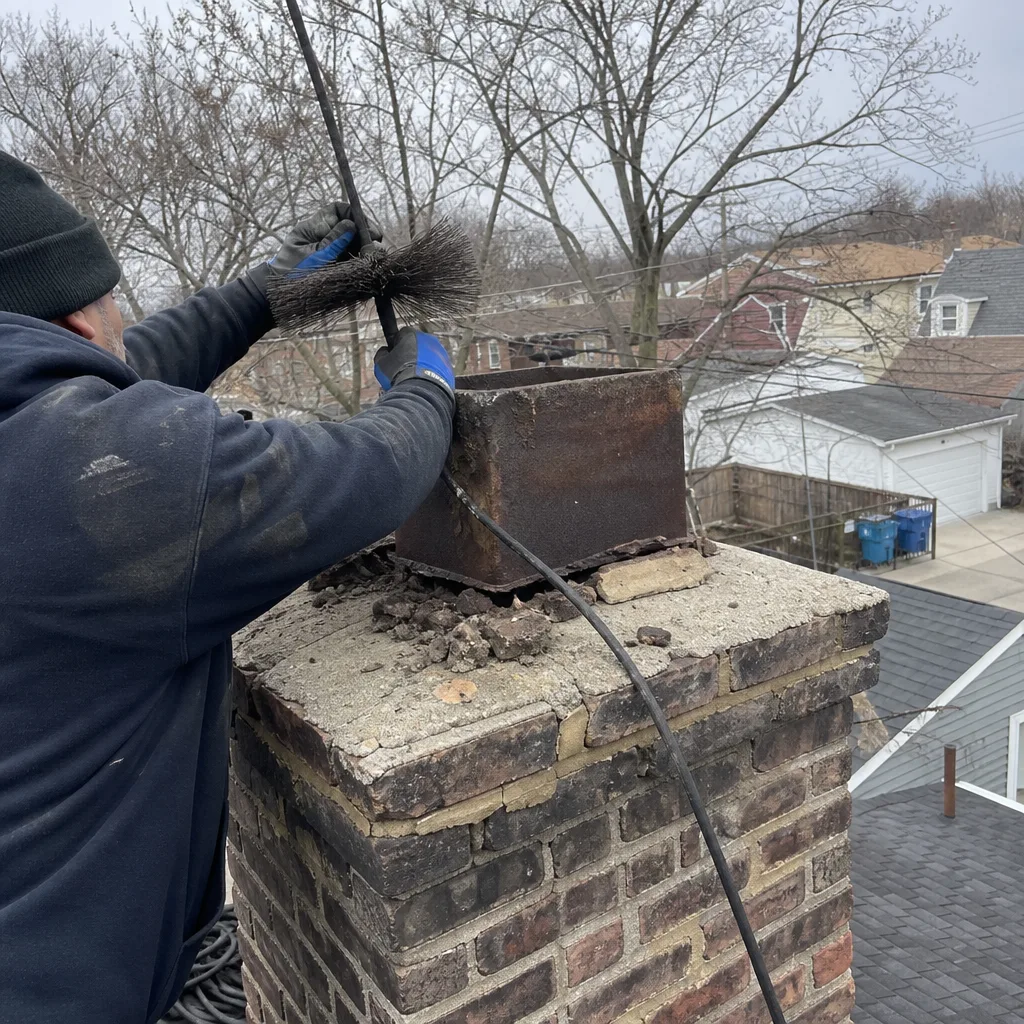 Before
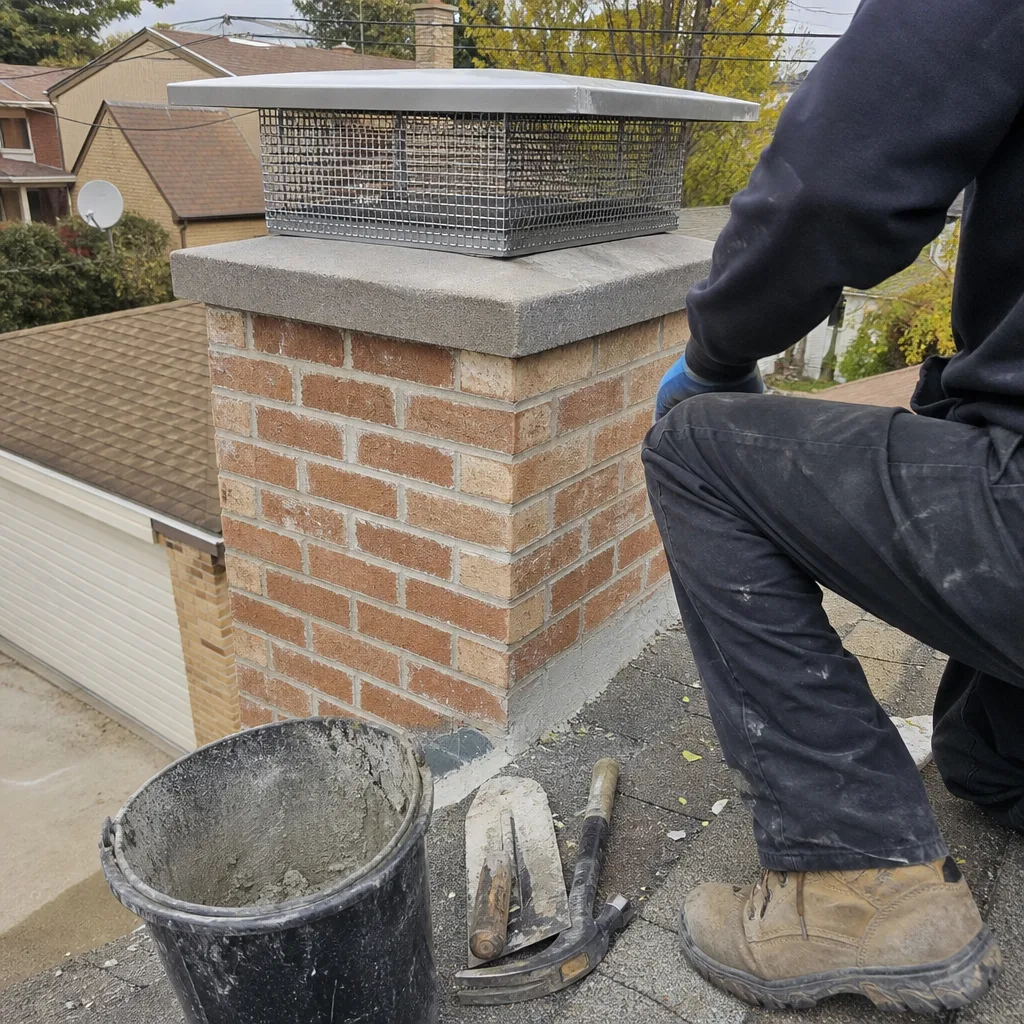 After
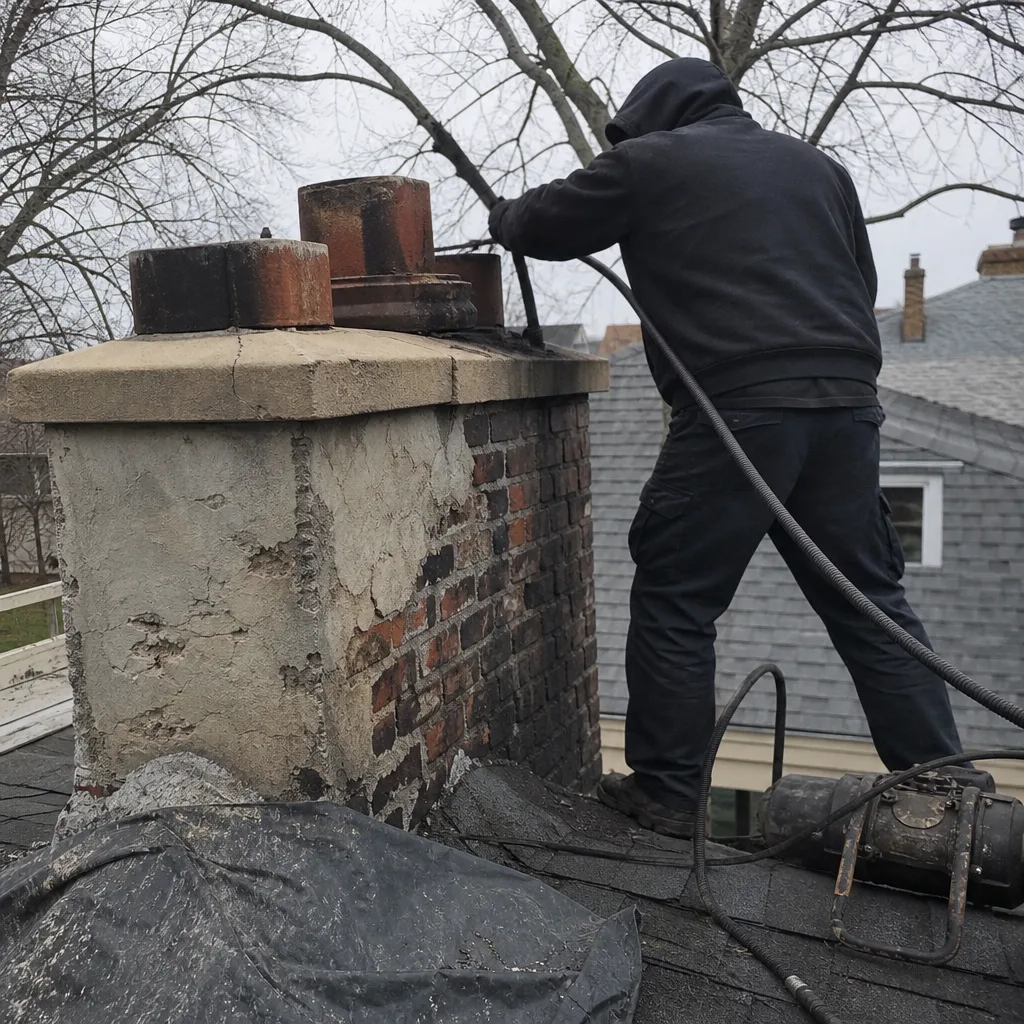 Before
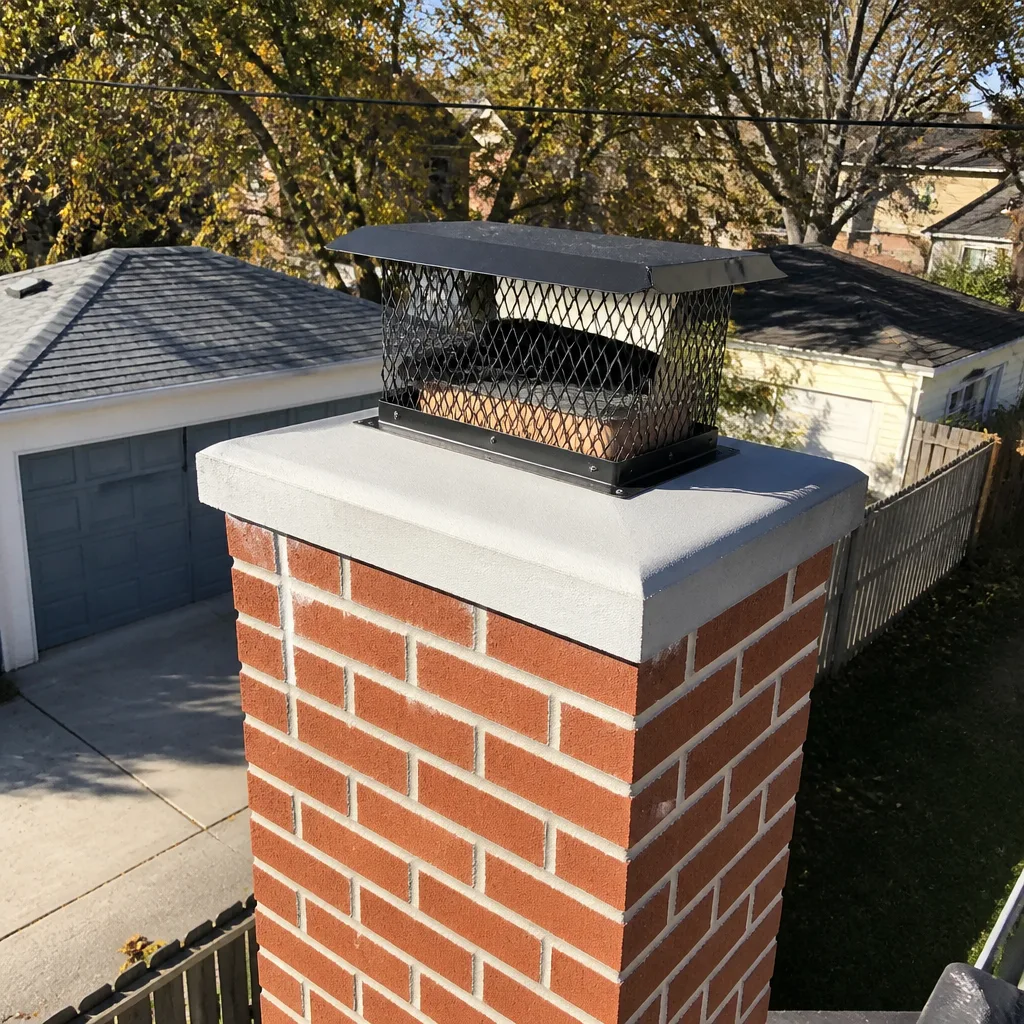 After
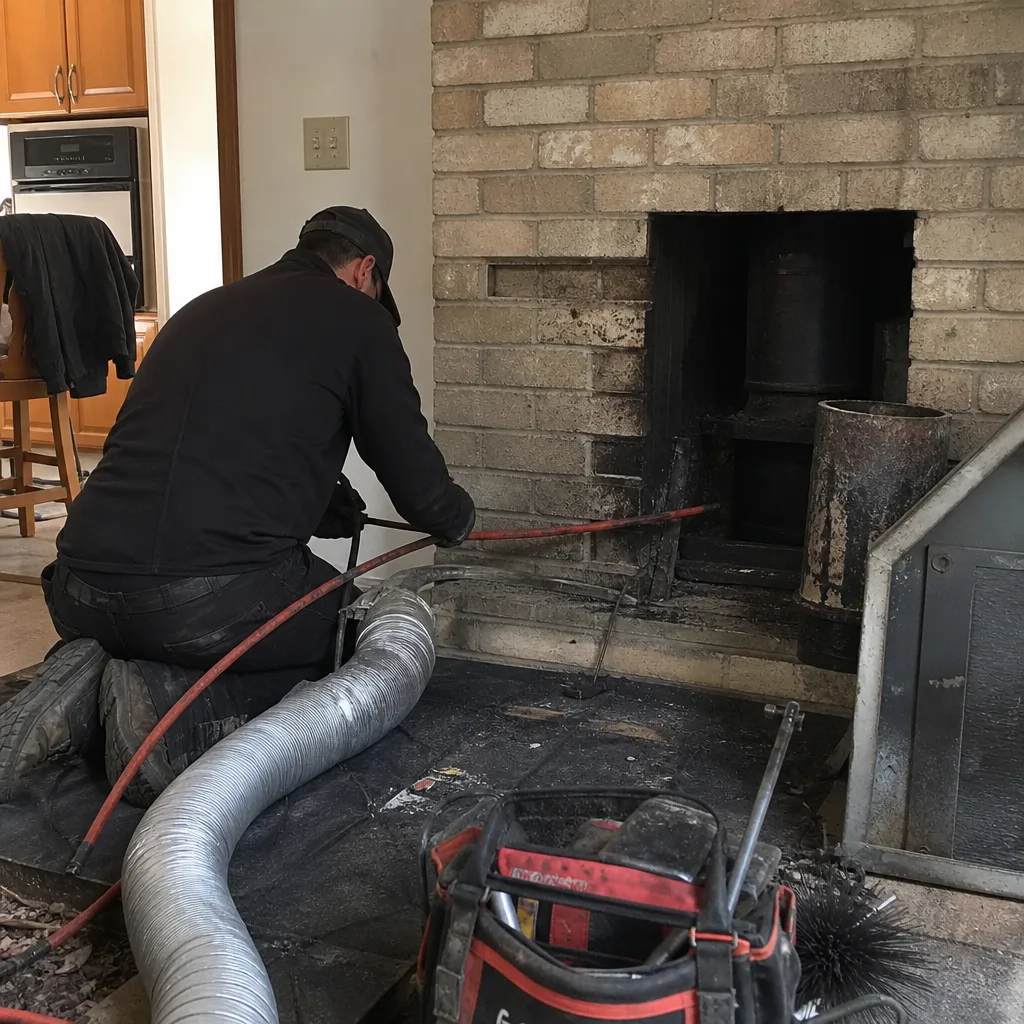 Before
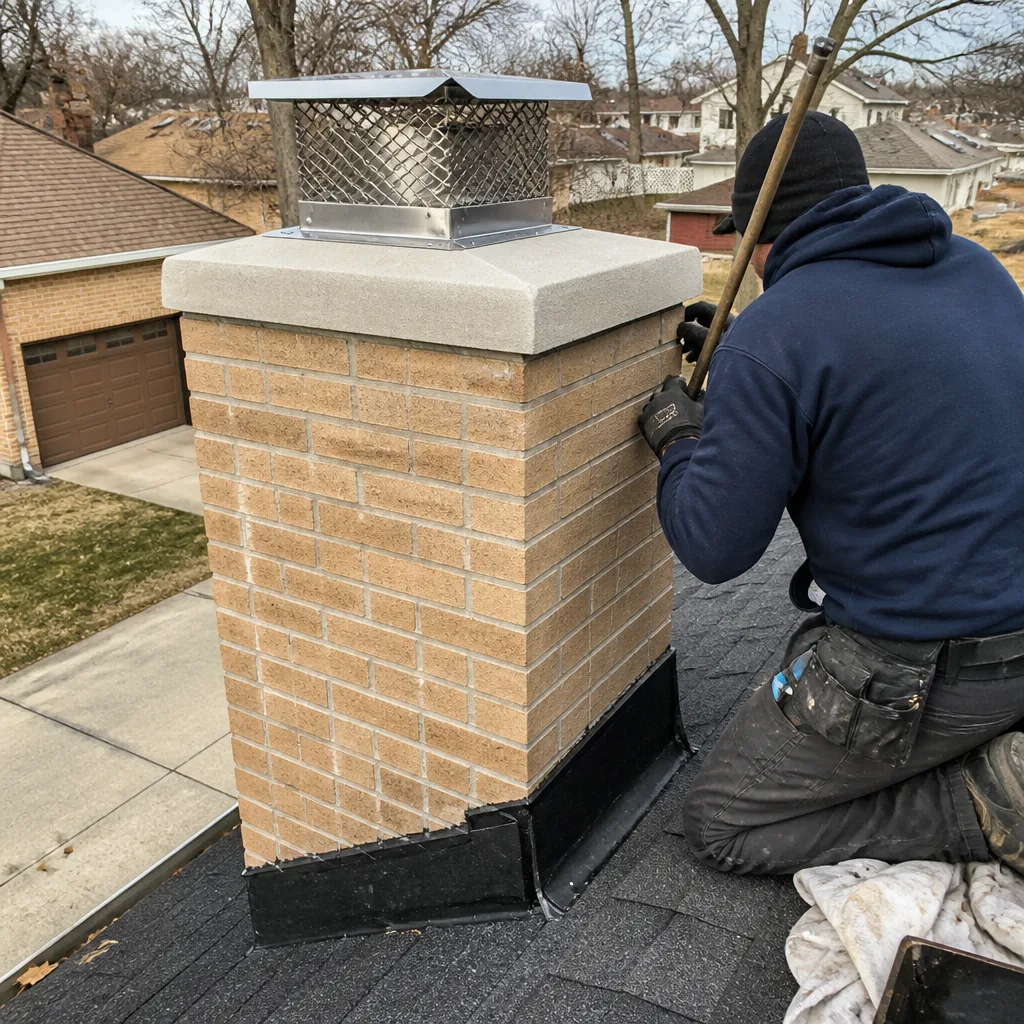 After
When to Call a Professional
Chimney maintenance becomes a professional issue the moment it involves the inside of the flue, the masonry above the roof line, or anything you can’t see from the ground. Cleaning creosote safely requires brushes sized to your flue and a proper containment method. Liner inspection requires the right camera equipment and the training to read what it shows. And any repair involving the crown, flashing, or liner is not a weekend project. If your fireplace smells damp, if you see soot streaks on the walls near the firebox, or if the sweep you used last year skipped the roof entirely, that’s a signal to call someone who does the full inspection. Chimney Sweep in Belmont Cragin offers free estimates. Call (877) 265-6720 and have your checklist ready before the heating season starts.
Frequently Asked Questions
The National Fire Protection Association recommends an annual inspection, and sweeping whenever creosote accumulation reaches one-eighth of an inch. For actively used wood-burning fireplaces in Belmont Cragin, that usually means a sweep every year. Gas inserts can often go two years between service visits, but should still be inspected annually for venting and burner operation.
A proper sweep removes creosote and soot from the flue, then inspects the crown, cap, flashing, liner, firebox, and damper for damage or wear. The sweep should document findings and tell you which items are normal wear and which need attention. A camera inspection may or may not be included; it’s worth asking when you book.
Expect to pay in the range of $150 to $300 for a standard sweep in the Belmont Cragin area, though the exact price depends on the chimney’s condition, height, and whether additional services like a camera inspection are added. For a precise quote on your chimney, call (877) 265-6720.
Not reliably. Some liner damage produces visible symptoms like smoke backing up into the room, or pieces of clay tile falling into the firebox after a heavy storm. But many cracked liners show no external signs until they’ve become a serious problem. A camera inspection is the only way to see the full length of the flue, especially in the older Belmont Cragin homes with clay tile liners.
HeatShield is a ceramic coating applied to the inside of a damaged flue liner to seal cracks and restore its structural stability. It’s an option when the liner is cracked but not collapsed or severely deteriorated. The resurfacing process restores the flue without a full liner replacement, which saves both time and money. A specialist can tell you after a camera inspection whether your chimney qualifies.
Not in the traditional creosote-removal sense, but yes, they need service. Gas systems accumulate soot when the air-to-fuel mix is off, and their venting must be inspected for blockages, loose seams, and proper draft. A service visit for a gas insert includes cleaning the glass, checking log positioning, testing the burner, and inspecting the venting path. Chimney Repair in Belmont Cragin covers gas systems as well as wood-burning fireplaces.
The Bottom Line
The chimney checklist that actually protects your Belmont Cragin home is the one that names the parts: crown, cap, flashing, liner, firebox, damper. Know what each one does, what failure looks like, and what question to ask. Then use the same checklist again next year, and the year after. A homeowner with a service record is hard to oversell and easy to protect. Dryer Vent Cleaning in Belmont Cragin runs on the same logic: inspect, document, maintain. One call covers it. If you haven’t had your chimney checked this year, call (877) 265-6720 and schedule the inspection before the cold sets in.
Written by the team at Crossroads Chimney Sweep, serving Belmont Cragin since 2014. For more guides & resources, visit our blog.